

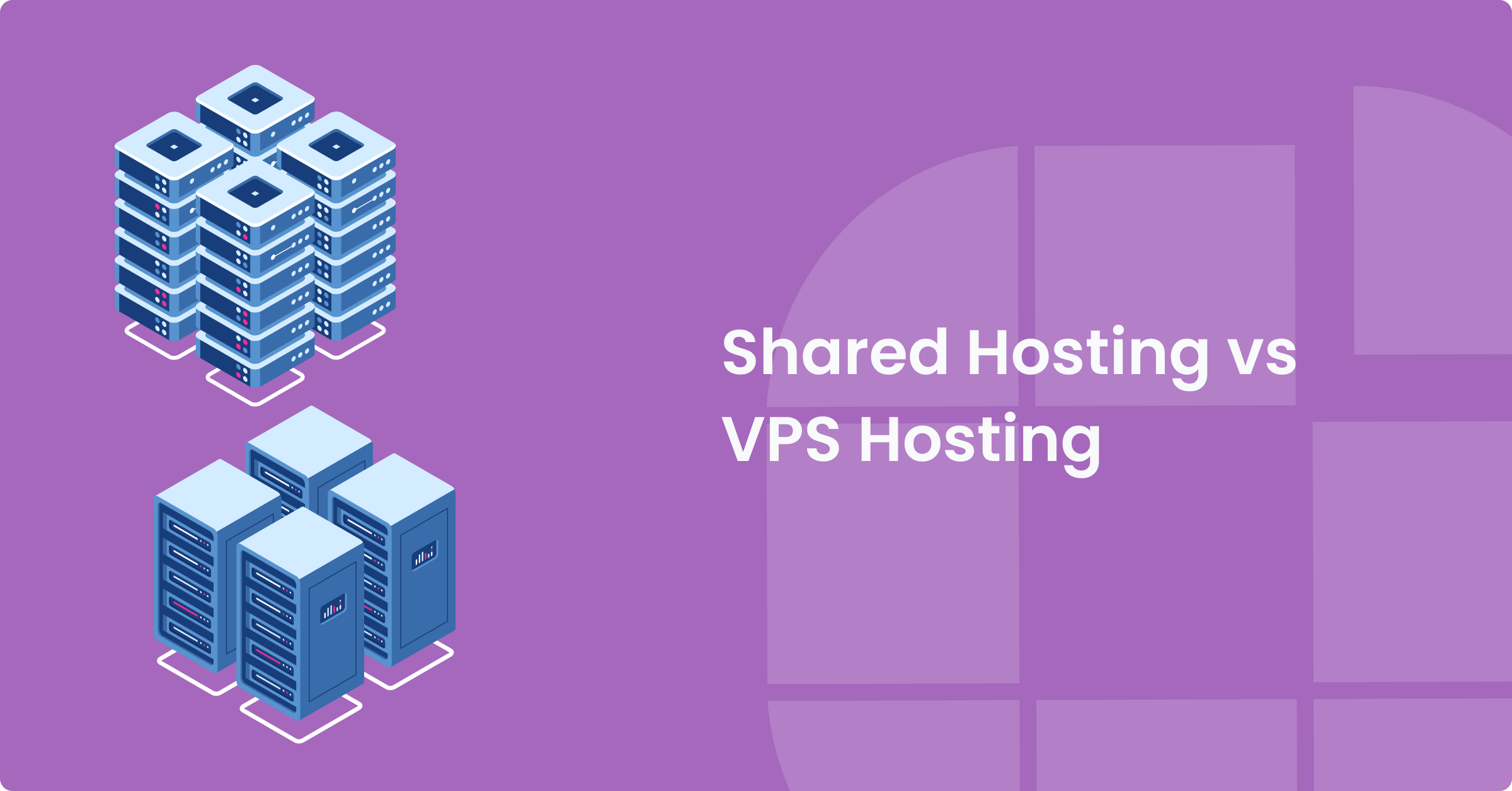
Trying to find the right type of hosting for your new website, but keep getting confused by all the different options on the market? Not sure how much power your new site is going to need and what sort of hosting will provide it?
Here, we aim to help you understand your options better by taking a close look at two of the most popular types of hosting, shared and virtual private server (VPS). Both are viable options for beginners entering the website development space, and both are offered by most leading web hosting providers.
So let’s have a closer look at exactly what shared and VPS hosting are and which one might be right for your needs.
What Is Shared Hosting?
Shared hosting is the simplest type of hosting. It involves numerous websites and clients sharing the same physical server.
With shared hosting, your website will be using a portion of the resources from the server. You won’t have any dedicated resources, and the performance and reputation of your site can be affected by those of other sites on the same server. Worse, a security breach on any of the websites on your server can have major implications for your site.
On the plus side, shared hosting is the cheapest option. It’s generally targeted at beginners, and little technical knowledge is required to use it. However, it also tends to be low-powered, which means that your site might not perform well if you add too much content or have too many visitors.
But that’s not to say that shared hosting isn’t useful. The shared hosting packages offered by leading hosting providers such as GoDaddy are well suited to small business websites, personal blogs, and portfolios. They are also a great option if you’re operating on a tight budget and want a simple, beginner-friendly hosting solution.
Pros of Shared Hosting
The most affordable hosting option
Usually well suited to beginners
Requires little to no technical knowledge
Usually Includes technical management
Cons of Shared Hosting
Performance can be poor
No root access for advanced configuration
Limited storage and bandwidth with many plans
Security can be an issue
What Is VPS Hosting?
VPS is similar to shared hosting, as it involves numerous websites sharing the same physical server. However, the similarities end there, as VPS hosting uses software to isolate each client. This means that you will have access to a dedicated amount of bandwidth, storage, RAM, and processing power that no one else can access.
You also won’t be affected by any other clients or their actions, and you will usually be able to add your own dedicated IP address for extra security. VPS hosting often comes with root server access as well, which enables you to install your own operating system or control panel and configure your server however you want.
Another plus of VPS hosting is that it’s generally quite scalable. Most hosting providers enable you to add and remove resources from your subscription as required, ensuring that you’re only ever paying for what you’re using.
On the downside, VPS hosting is usually more expensive than shared hosting, although there are budget-friendly options out there. It also requires more technical knowledge to use, especially if you want to take full advantage of the server configuration tools on offer.









Leave a Reply